
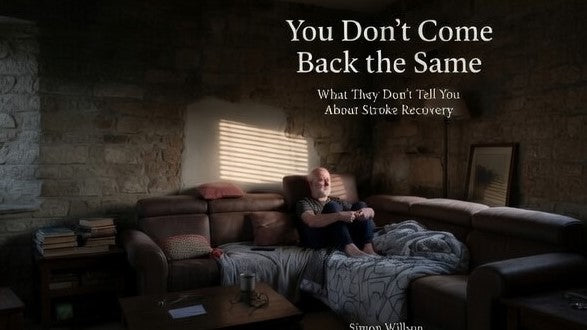
Over the past few years many of you have followed the writing that has appeared here. Some of it has been about stroke recovery. Some about memory, family and the strange process of adapting when life changes in ways you never expected.
Those pieces all came from the same place.
An attempt to describe experiences that are surprisingly difficult to explain once you have lived through them.
After my stroke I spent a long time believing the things happening inside my head were unique to me. The exhaustion. The anxiety. The sense of no longer being the person you once were even though, from the outside, you appear largely unchanged.
Eventually I wrote about that experience publicly.
The response was overwhelming.
Hundreds of survivors and carers replied describing almost identical feelings. Many said they had believed they were losing their minds until they realised someone else was going through the same thing.
That moment changed everything.
What began as a single piece of writing slowly became something larger. Conversations with survivors. Messages from carers. Stories from families quietly navigating the same confusion.
Over time those experiences became the foundation for a short piece of writing that attempts to explain what that period of life actually felt like.
The result is a short novelette called:
You Don’t Come Back the Same
It’s no Booker winner. Then again, I’m no novelist.
It is simply an honest account of what happened after the stroke and the confusing years that followed. Nothing polished, nothing exaggerated, just the reality as best as I could describe it.
And it is not only my voice in these pages. Claire’s view is there as well, which in many ways is a complete one hundred and eighty degrees from my own. Illness never belongs to just one person. It quietly reshapes the life of the partner standing beside it too.
The piece is not a medical guide and it is not a recovery manual.
It is simply an attempt to describe what that period of life actually feels like. The panic attacks, the exhaustion, the withdrawal from normal life and the quiet ways families try to adapt when nobody quite knows what is happening.
If the story does anything useful, I hope it helps people recognise experiences that are often very difficult to put into words.
That idea sits at the heart of everything connected to Quiet Thanks™.
Recognition.
Being seen.
Sometimes the most powerful thing we can offer each other is simply the reassurance that what we are experiencing is not happening in isolation.
The novelette is now available as an ebook.
If you would like to read it, you can find it here:
Simon
Quiet Thanks™

Leave a comment
This site is protected by hCaptcha and the hCaptcha Privacy Policy and Terms of Service apply.